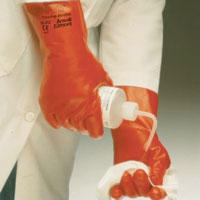
Follow these steps to choose the appropriate type of protective glove for your job. The Glove Selection Chart also provides advantages and disadvantages for specific glove types. This guidance was prepared for laboratory researchers but may also be helpful for other people working with hazardous materials.
Once selected, glove use requirements for your lab should be posted in your Chemical Hygiene Plan flipchart under the Standard Operating Procedures section.See below for the Glove Comparison Chart.
Identify the hazards of the material(s) you'll be working with.
-
Base selection of glove type and material on the type of exposure and nature of the hazard. Some chemicals can easily penetrate gloves that work very well for other chemicals.
Consider these factors:- Chemical type
- Temperature extremes, cryogenic properties
- Physical hazards (sharps, piercing objects)
- pH
- Toxicity
- The infectious potential of biological hazards
-
Read the Safety Data Sheets (SDSs) for each chemical involved.
Determine if you'll have incidental or extended contact with the hazardous materials.
-
Incidental contact (little or no direct contact with the hazardous material) includes these situations:
- Accidental spills or splashes
- Accidental overspray from a dispensing device
- Handling infectious agents that require barrier protection
- To prevent contamination of materials during handling.
If you will have incidental contact, go to Step 3.
-
Extended contact includes these situations:
- Handling highly contaminated materials
- Submerging hands in a chemical or other hazardous substance
- Need for physical protection from temperature extremes or sharp/piercing objects
If you will have extended contact, go to Step 4.
-
For incidental contact, follow these selection guidelines.
- Type of glove:
- Disposable, surgical-type gloves are appropriate for incidental contact.
- Nitrile gloves are preferred over latex because of their chemical resistance, their tendency to visibly rip when punctured, and to prevent possible latex allergies.
- Glove usage:
- Check for rips or punctures before use.
- Remove and replace gloves immediately with new ones when a chemical spills or splashes on them.
- Never wash or reuse disposable gloves.
- Always remove glove before touching common objects such as doorknobs, phones, or elevator buttons.
- Type of glove:
-
For extended contact, follow these guidelines.
- Type of glove:More substantial gloves are required for extended use.
- Norfoil gloves are recommended for highly toxic materials and materials that are absorbed through the skin.
- See the Glove Selection Chart below for advantages and disadvantages of commonly used gloves for extended contact.
- Glove usage: Many gloves intended for extended contact are reusable.
- Check the gloves for:
- Rips or punctures before and after each use
- Prior contamination
- Signs of degradation (change in color or texture)
- Replace gloves as soon as signs of degradation appear.
- Wash after removal and air dry in the laboratory.
- Consider wearing inner surgical gloves for extra protection.
- Check the gloves for:
-
Dispose of used and damaged gloves according to whether or not they're contaminated with hazardous materials.
- Follow the appropriate guidelines below:
- No contamination:
Place in regular lab trash. - Radioactive materials:
See how do I dispose of radioactive waste? - Chemical contamination:
See the Hazardous Waste Program (HWP). - Biohazardous materials:
See the how do I dispose of my waste web page.
- No contamination:
- ALWAYS wash your hands after removing gloves.
- Follow the appropriate guidelines below: